
The rise of integrated living in Saudi Arabia
Vision 2030, demographic change and urbanisation are accelerating demand for amenity-rich, well-connected residential communities across the Kingdom.
16 February 2026
Saudi Arabia’s residential market is undergoing a fundamental shift. Housing delivery is no longer measured solely by volume, but increasingly by the quality of life it supports. Vision 2030 has reframed national housing policy towards affordability, liveability and long-term social outcomes, placing integrated living at the centre of residential development strategies.
Rather than planning residential, retail and social uses as adjacent components, integrated communities are now being designed as cohesive, mixed-use developments. Housing is intentionally combined with education, healthcare, retail, leisure and public spaces to create live-work-play neighbourhoods that function as complete environments, rather than isolated residential products. Our recent research confirms a growing preference among both Saudi nationals and expatriates for amenity-rich, well-connected neighbourhoods that support everyday living.
Urbanisation and lifestyle change
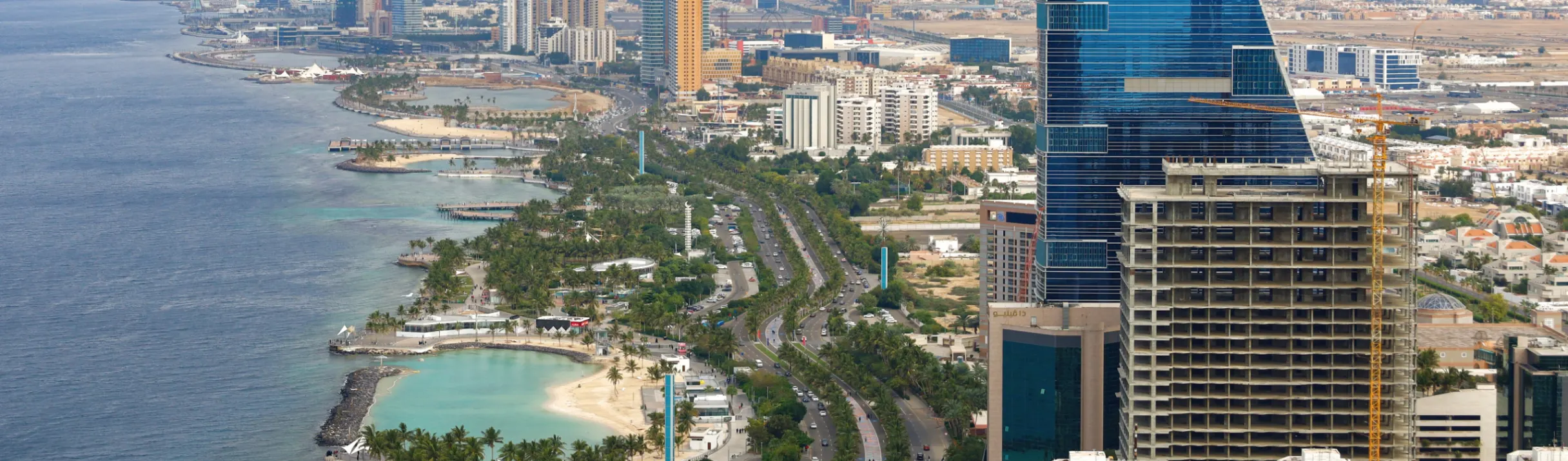
Rapid population growth and urban expansion are key structural drivers behind this shift. Saudi Arabia is now more than 85% urbanised, with this expected to increase further through to 2030. Riyadh, Jeddah and the Dammam Metropolitan Area continue to absorb the majority of population growth, placing sustained pressure on traditional low-density residential models.
Demographics matter too. More than 60% of the Kingdom’s population is under the age of 35, creating a large cohort of younger, aspirational households entering the housing market. This generation places greater emphasis on community living, convenience and access to amenities than previous generations, reshaping expectations around where and how people choose to live.
Riyadh’s metropolitan population has grown from approximately 6.5 million in 2015 and is expected to approach 9 million by 2030, accounting for more than 20% of the Kingdom’s urban population. These dynamics have contributed to longer commute times, rising land values and evolving household structures, accelerating demand for self-contained, walkable neighbourhoods that reduce reliance on long-distance travel.
How residential communities are evolving
In response, master planned communities are shifting away from villa-dominated layouts towards a broader mix of housing types, including townhouses and low-rise apartments. This evolution is driven by affordability pressures, rising land values and changing household structures, particularly among younger and first-time buyers.
Amenities have transitioned from optional enhancements to core determinants of residential value. Access to parks, schools, healthcare, sports facilities and local retail now ranks alongside price and location as a key influence on purchasing decisions. Developments that integrate these amenities from the outset are typically achieving stronger demand and improved absorption across market cycles.
Equally important is the growing role of the public realm. Streetscapes, walkways, open spaces and communal areas are increasingly shaping pricing resilience and sales velocity. Residential developments with well-designed public spaces are better positioned to sustain demand, particularly during periods of market adjustment, as buyers place greater value on environments that support social interaction and daily convenience.
Integrated living as the new benchmark
Integrated living is fast becoming the benchmark for residential success in Saudi Arabia. Developers are required to transition from product-led approaches towards people-led strategies, embedding lifestyle, community and experience from the earliest planning stages.
This shift places greater importance on early strategic advisory. Aligning vision, design, market positioning and commercial strategy from the outset will be essential in delivering communities that meet evolving buyer expectations while remaining financially viable over the long term.
As Saudi Arabia’s cities continue to grow and mature, integrated residential communities will play a central role in shaping urban resilience, supporting quality of life and sustaining long-term residential value.
Let our consultants build a strategy aligned with your goals.